Horse Blanketing Guide
Published on: 5/15/2025Key Takeaways
- Horse blanketing is mainly used to keep horses sleek for showing and to provide comfort and warmth during cold, wet, or windy weather.
- Choosing the right blanket depends on factors like your horse’s age, body condition, coat thickness, climate, and whether they are stalled or turned out.
- Sheets are lightweight with no fill or mild conditions, while blankets include insulation (fill) for colder temperatures, with higher fill meaning more warmth.
- Turnout blankets and sheets are waterproof for pasture use, while stable options are designed for indoor use and should not be worn in wet conditions.
- Denier measures blanket durability and fill measures warmth–higher numbers mean tougher materials and better insulation for harsher weather or hard-on-blanket horses.
We understand that blanketing horses can seem overwhelming. But take a deep breath, friends, we’re here to help simplify with this in-depth but simplified horse blanketing guide. Continue reading for understanding of reasons to blanket horses, different horse blanket types, sizing horse blankets, cleaning horse blankets and much more!
First, Why Horses Are Blanketed
There are two main reasons horse owners blanket their horses and ponies:
- To keep horses sleek for the show ring
- To provide comfort during inclement weather conditions
Different Horse Blanket Types & When to Wear Each
There is much to consider when selecting a horse blanket, details such as age, body condition and coat thickness. Additionally, horses across the country experience a variety of climates, weather conditions and stabling environments. Luckily, just as your closet holds clothes tailored to the day and season, there are different types of horse blankets available, too, so you can select just what your horse needs when he needs it.
Let’s first look at a few horse blanketing basics sheets vs. blankets and turnout vs. stable. How familiar are you with the differences between each?
Sheets vs. Blankets
-
- A horse sheet is lightweight and is perfect for those mildly cold or windy days. They have no fill.
- A horse blanket offers fill, which is essentially a form of insulation sewn into the blanket to add warmth (think of your poufy winter coat!) The higher the fill number on a blanket, the cozier the pony on those cold days.
Stable vs. Turnout
-
- Sheets and blankets come in two varieties: turnout and stable. To put it simply, turnout sheets and turnout blankets are intended for horses at turnout. They will feature waterproof material to keep pasture ponies dry. Without waterproof technology, a wet horse blanket could only make your horse colder, which is of course not what was intended!
Understanding Warmth & Durability
When you are selecting a horse blanket, you will notice a few number sets under the product descriptions, noting denier and fill.
Denier denotes the durability of a horse blanket or sheet. It measures nylon fiber density on the outer material of horse blankets. Denier ranges from 70 to 2400D. The higher the denier, the more durable it is for those tough-on-blanket horses (you might have one or two in mind!)
As we shared earlier, fill is padding that adds an extra layer of warmth to your horse’s blanket. Both with denier and fill, the higher the number, the tougher or warmer the blanket’s material will be.
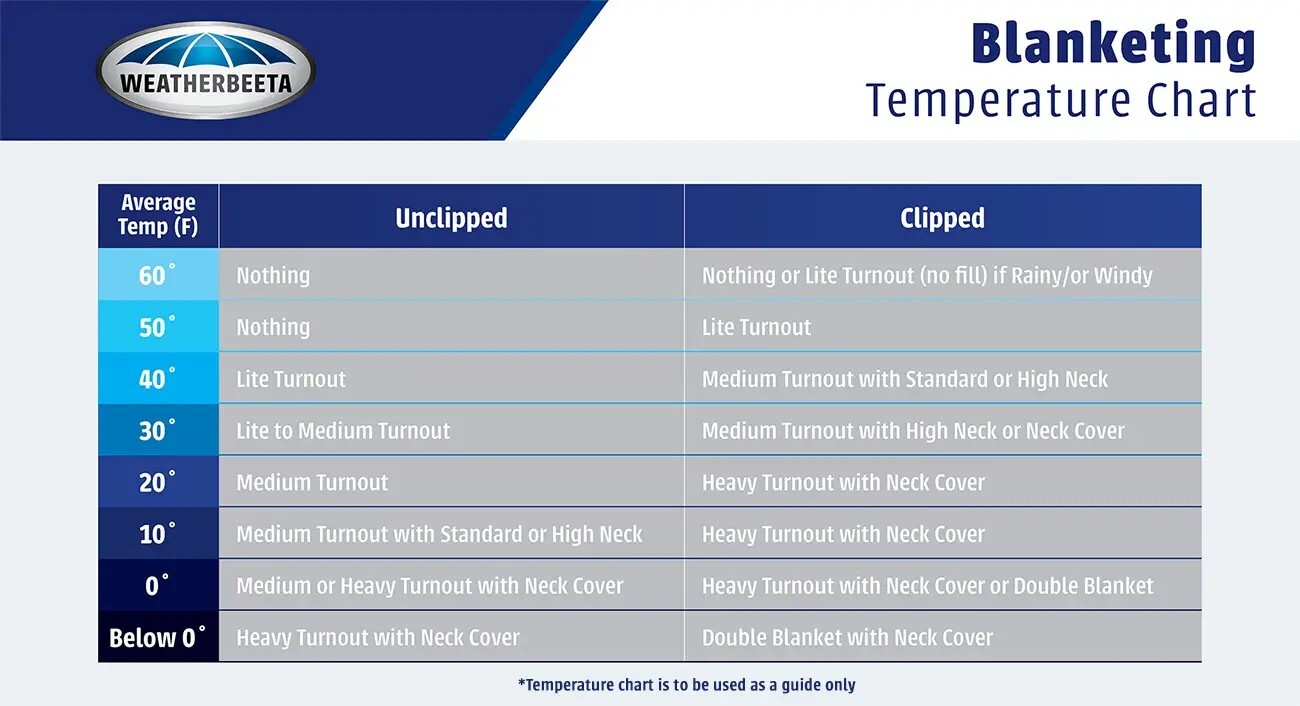
The chart below provides a quick guide to the best blanketing choices for different average temperatures. Chart provided by WeatherBeeta.
Whether for horse, livestock, or pet, Valley Vet Supply is your one-stop shop for trusted care. Explore more of our horse category at ValleyVet.com